

Have you noticed a yellow patch on your toenail, a crumbly edge or a nail that is becoming difficult to cut? It can be tempting to cover it up and leave it for another day, especially when it does not hurt.
Fungal toenails can affect more than the appearance of your feet. Over time, infected nails may become thick, uncomfortable in shoes and harder to manage.
At VitaStep Podiatry, I provide personal foot care through home visits across Buckinghamshire and Berkshire. If you are concerned about changes to your nails, we can look at them together and discuss what care would be appropriate for you.
What are the signs of a fungal toenail infection?
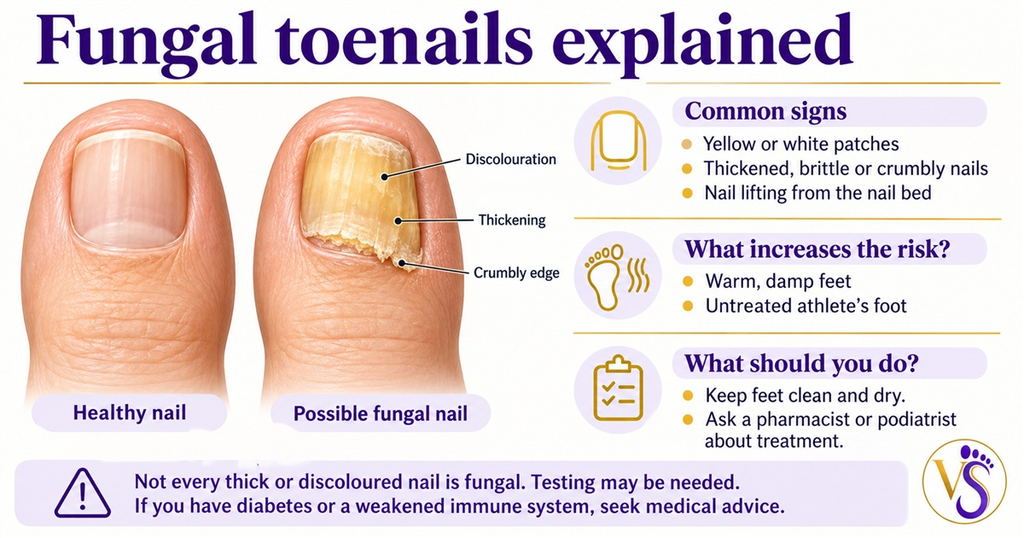
A fungal nail infection, also called onychomycosis, often begins at the edge or tip of the nail. The changes may be small at first and gradually become more noticeable.
Common signs include:
- White, yellow or brown discolouration
- Thickening of the nail
- Brittle, crumbly or ragged edges
- Changes in nail shape
- The nail lifting away from the skin underneath
One toenail may be affected, or changes may develop in several nails.
However, not every thickened or discoloured nail has a fungal infection. Previous injury, pressure from shoes and conditions such as psoriasis can cause similar changes. An assessment can help establish the next step, including whether testing is appropriate. NHS: Nail problems
Why is it important to address fungal toenails?
Thickened nails can affect everyday comfort
Fungal nail infections are usually not serious, and some mild, painless cases may only need monitoring and self-care. However, there are good reasons to seek advice before the problem becomes more troublesome.
As a nail thickens, it may press against your shoes or become difficult to trim safely. You might notice tenderness when walking or feel less comfortable wearing your usual footwear.
Careful nail reduction can help manage thickness and improve comfort. However, trimming or thinning the nail alone does not eliminate the fungal infection.
The infection can affect other nails and skin
The fungi responsible for nail infections can also affect the skin of your feet, causing athlete’s foot. This can lead to itching, peeling and cracks, particularly between the toes.
When both the skin and nails are affected, they can act as sources of reinfection. Addressing both is therefore an important part of managing the problem and reducing recurrence.
Cracked skin can allow bacterial infection
Cracks in the skin can provide an entry point for bacteria, sometimes leading to cellulitis, a potentially serious bacterial skin infection. This is a separate infection from the nail fungus itself.
Serious complications are uncommon, but extra care is important if you have diabetes, poor circulation or a weakened immune system. Mayo Clinic: Nail fungus,
If your foot becomes hot, swollen or increasingly painful, or you develop spreading redness or feel unwell, seek urgent medical assessment rather than waiting for a routine foot-care appointment.
Established infections can be harder to clear
Early, mild fungal nail infections may respond more readily to treatment. Once more of the nail or several nails are involved, managing the infection can become more challenging.
Seeking advice early helps you understand your options. It does not mean every nail needs immediate medication, but it gives you an opportunity to make an informed decision.
How I can help at VitaStep Podiatry
There is no need to feel embarrassed about your nails. My approach is practical, supportive and focused on helping you feel comfortable.
During your appointment, I will look at your nails and surrounding skin and ask about your symptoms, general health and any treatments you have already tried.
Together, we can discuss:
- What may be causing the nail changes
- Whether further assessment or testing is needed
- Careful trimming and reduction of thickened nails where appropriate
- Suitable treatment options and their limitations
- How to care for your feet between appointments
- Whether follow-up care would be helpful
If further investigation or prescription treatment is needed, I can explain the appropriate next steps.
How long does fungal toenail treatment take?
Toenails grow slowly, so treatment requires patience. Even when treatment is working, the damaged part of the nail does not immediately return to normal—it needs to grow out.
Depending on the treatment, care may continue for several months or longer. A clearer strip of nail growing from the base can be a sign of progress.
I will help you understand what to expect from your care plan and why following treatment instructions consistently matters. No treatment can guarantee that an infection will never return.
How can you reduce the chance of fungal nails returning?
Small, regular habits can support treatment and help protect your feet:
- Wash your feet and dry carefully between the toes.
- Wear fresh socks each day and change damp socks promptly.
- Choose well-fitting shoes that help keep your feet dry.
- Keep nail clippers and towels for your own use.
- Wear flip-flops in communal showers and changing areas.
- Address itchy, peeling or cracked skin promptly.
- Follow your agreed treatment and foot-care plan.
During your appointment, we can discuss advice that fits your footwear, activities and daily routine.
Fungal nail care in Buckinghamshire and Berkshire
If you are looking for help with thickened, discoloured or suspected fungal toenails, VitaStep Podiatry offers foot care in the comfort of your own home.
My home-visit service covers Slough, Windsor, Maidenhead, Marlow and parts of South Buckinghamshire, including Burnham, Farnham Common, Iver, Gerrards Cross and Chalfont St Peter. Please contact me to confirm availability for your address.
You do not have to wait until your nails become painful. Let’s discuss your concerns and work out an appropriate plan for your feet.
Contact VitaStep Podiatry to arrange your home visit
Call: 07789 992 623