
Foot pain is common, but that doesn’t mean you should simply put up with it. Our feet support us every day, and pain can affect walking, exercise, work and everyday activities.
Foot pain can develop for many reasons, from unsuitable footwear and increased activity to changes in the skin, nails, joints or soft tissues. Understanding what may be causing the problem is the first step towards finding the right treatment.
Here are seven common causes of foot pain, including heel pain, corns, ingrowing toenails, forefoot problems and arthritis, and some signs that it may be time to seek professional advice.
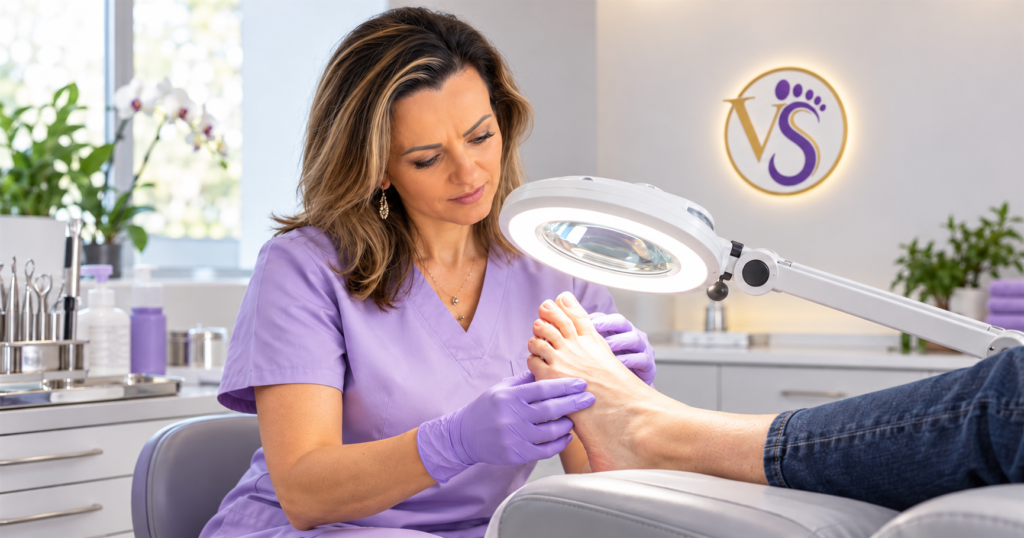
When you see Renata for foot treatment, she wants you to feel listened to and cared for. During the visit, she takes the time to understand your foot pain, explore what may be causing it, and answer your questions. She’ll work with you to find a treatment approach that suits your needs and helps you feel more comfortable on your feet.
1. Heel Pain
Heel pain is a very common foot problem and can make walking, standing, exercising and everyday activities uncomfortable. Pain may be felt underneath the heel, around the sides of the heel or at the back of the heel, and the location and type of pain can provide useful clues about its possible cause.
Heel pain is not a condition itself. There are several possible causes, so persistent heel pain should be properly assessed rather than automatically assumed to be plantar fasciitis.
What Can Cause Heel Pain?
Plantar fasciitis is one of the most common causes of pain underneath the heel. It affects the plantar fascia, a strong band of connective tissue running along the bottom of the foot. Pain is often most noticeable during the first few steps after getting out of bed in the morning or when walking again after a period of rest. Symptoms may also increase following prolonged standing, walking or physical activity.
Achilles tendinopathy commonly causes pain and stiffness around the Achilles tendon at the back of the heel or just above it. Symptoms may develop following repetitive loading, changes in activity or increased exercise and can be particularly noticeable after rest or during physical activity.
Heel bursitis occurs when one of the small fluid-filled sacs that help cushion tissues around the heel becomes irritated. This may cause tenderness, swelling or a bruised sensation, particularly around the back of the heel.
Haglund’s deformity is a bony prominence at the back of the heel. Pressure and rubbing from footwear can irritate the area and surrounding soft tissues, resulting in pain, redness or swelling.
Heel fat-pad irritation or bruising can cause a deep, bruise-like pain directly underneath the heel. The natural fat pad beneath the heel acts as a shock absorber, and symptoms may develop following repetitive impact, prolonged standing or direct trauma.
Stress fractures of the heel bone can also cause heel pain. Pain may initially occur during activity but can become more persistent as the injury progresses. A suspected stress fracture requires appropriate assessment and investigation.
In children and adolescents, heel pain may sometimes be associated with Sever’s disease (calcaneal apophysitis), particularly in active children during periods of growth.
What Can Contribute to Heel Pain?
Several factors may contribute to heel pain, including:
– a sudden increase or change in physical activity
– repetitive running or jumping
– prolonged standing or walking
– hard working or exercising surfaces
– unsuitable, worn or poorly fitting footwear
– foot structure and biomechanics
– reduced ankle flexibility or tightness in the calf muscles
– increased repetitive loading through the heel
Why Is a Professional Assessment Important?
Often, more than one factor contributes to the development of symptoms.
Not every painful heel has the same cause. The location of the pain, when it occurs, how it started and what activities make it better or worse are all important when determining the likely problem.
A professional assessment may include examining the painful area, joints and soft tissues, ankle movement, foot structure, footwear and foot function. Your activity levels and medical history may also be considered.
Where symptoms suggest a condition such as a stress fracture or another problem requiring further investigation, referral for imaging or specialist assessment may be appropriate.
How Can Heel Pain Be Managed?
Treatment depends on the underlying cause. Depending on the assessment findings, management may include:
– footwear advice or modification
– temporarily modifying aggravating activities
– stretching or strengthening exercises where appropriate
– taping
– heel cushioning or pressure relief
– insoles or orthoses where clinically indicated
– advice on gradually returning to activity
Some conditions may require additional medical treatment, immobilisation, imaging or referral.
Persistent heel pain should not simply be ignored or repeatedly self-treated without understanding its cause. Early assessment can help identify contributing factors and establish an appropriate management plan.
2. Corns and Calluses
Corns and calluses are areas of thickened, hardened skin that develop in response to repeated pressure, friction or mechanical stress. They are particularly common on the toes, around prominent joints, underneath the forefoot and around the heels.
Although they are often considered a minor foot problem, corns and calluses can become very uncomfortable and may affect walking and footwear choices. More importantly, when they repeatedly return, they can be a sign that excessive pressure is continuing to act on a particular area of the foot.
Although the terms are sometimes used interchangeably, corns and calluses are slightly different.
A callus is usually a broader area of thickened skin that develops over an area exposed to repeated pressure or friction. Callus commonly develops underneath the ball of the foot, around the heels or over other weight-bearing areas.
What Is the Difference Between a Corn and a Callus?
A corn is usually smaller and more concentrated. It has a central area or core of hardened keratin that can press into the underlying tissue, which is why a relatively small corn can sometimes be surprisingly painful.
Pain may become particularly noticeable when walking or when direct pressure is applied to the area.
Different Types of Corns
There are several types of corns, and identifying the type and its location can help determine what is creating the pressure.
Hard corns commonly develop over prominent areas of the toes or underneath the foot. They tend to be firm, well-defined areas of thickened skin and can become painful when pressure is applied.
Soft corns usually develop between the toes, where the skin is exposed to pressure but also remains moist. They often appear softer or whitish and may become particularly uncomfortable when adjacent toes rub against each other.
Seed corns are very small areas of keratinised skin that may occur on the sole of the foot. They can sometimes be confused with other skin lesions, so assessment can be useful when the diagnosis is uncertain.
Why Do Corns and Calluses Develop?
Corns and calluses are not simply caused by “bad skin.” They usually develop because the skin is trying to protect itself from repeated pressure or friction.
Contributing factors may include:
– tight, narrow or poorly fitting footwear
– prominent joints or bony areas
– hammer, claw or mallet toes
– bunions and other structural changes
– altered pressure underneath the forefoot
– changes in walking or foot function
– prolonged standing or walking
– reduced natural cushioning underneath the foot
– repetitive occupational or sporting activity
Sometimes several factors are involved. For example, a hammer toe combined with a shallow toe box can create repeated pressure over the joint, resulting in a painful corn.
Why Do Corns Keep Coming Back?
Removing a corn can provide significant relief, but it does not necessarily remove the reason the corn developed.
If the same area continues to experience excessive pressure or friction, the thickened skin is likely to gradually return.
For this reason, effective management should consider not only the corn itself but also the underlying cause. This may involve examining footwear, toe position, foot structure and the way pressure is distributed across the foot.
How Can Corns and Calluses Be Treated?
Professional treatment may involve carefully reducing areas of excessive callus and removing the hardened tissue from a painful corn. This can often provide immediate improvement in comfort.
However, longer-term management may also involve reducing the pressure responsible for the problem.
Depending on the assessment findings, this may include:
– footwear advice or modification
– padding or cushioning
– pressure-relieving devices
– toe protection or separators where appropriate
– insoles or orthoses where clinically indicated
– advice about moisturising dry or callused skin
– regular professional foot care where necessary
The aim is not simply to remove hard skin but, where possible, to reduce the mechanical pressure that is causing it to develop.
Should You Treat Corns Yourself?
Care should be taken with home treatment.
Cutting corns or calluses with blades, scissors or other sharp instruments can damage healthy skin and may result in bleeding, wounds or infection.
Over-the-counter corn plasters and some corn-removing products contain acids that break down thickened skin. These products may also damage the surrounding healthy skin if used incorrectly and are not appropriate for everyone.
People with diabetes, reduced circulation, peripheral neuropathy or reduced sensation in their feet should be particularly cautious and should seek professional advice before attempting to treat corns or calluses themselves.
Why Are Corns and Calluses Particularly Important in Diabetes?
For someone with diabetes, particularly when neuropathy or reduced circulation is present, an area of callus may be more than a cosmetic problem.
Repeated pressure underneath an area of callus can contribute to tissue damage, and a person with reduced sensation may not necessarily feel that damage developing.
This is why regular foot assessment, pressure management and appropriate footwear are particularly important for people who are at increased risk of diabetic foot complications.
When Should You Seek Professional Advice?
Professional assessment is recommended if a corn or callus:
– becomes painful or repeatedly returns
– affects walking or footwear
– develops over a prominent or deformed area of the foot
– cracks, bleeds or develops broken skin
– becomes red, swollen or unusually warm
– changes in appearance or you are unsure whether it is actually a corn
– occurs when you have diabetes, poor circulation or reduced sensation
Sometimes a lesion that appears to be a corn may be another condition, such as a verruca, so assessment can also help establish what the lesion is before treatment begins.
Professional treatment can help relieve discomfort, but understanding why the pressure is occurring is an important part of preventing or reducing recurrence.
3. Ingrowing Toenails
An ingrowing toenail develops when the edge or corner of the nail irritates or penetrates the surrounding skin. It most commonly affects the big toe and can range from mild tenderness and inflammation to a painful condition associated with infection.
In the early stages, the skin around the nail may feel tender when pressure is applied or when wearing shoes. As the problem progresses, the area can become increasingly painful, red and swollen, and the skin around the nail may become inflamed.
What Causes an Ingrowing Toenail?
There are several possible contributing factors, including:
– cutting the toenails too short or cutting down into the corners
– picking or tearing the sides of the nails
– tight, narrow or poorly fitting footwear
– repeated pressure or trauma to the toe
– naturally curved or involuted nails
– changes in the shape or thickness of the nail
– excessive pressure from sporting or occupational activities
Sometimes the shape of the nail itself means that the problem continues to return despite careful nail cutting and appropriate footwear.
What Are the Signs of Infection?
When the nail damages or penetrates the surrounding skin, it can create an opening through which bacteria may enter. An ingrowing toenail can therefore sometimes progress from local irritation to an infection of the surrounding tissue.
Possible signs include increasing redness, swelling, warmth, worsening or throbbing pain, discharge or pus, bleeding, unpleasant odour and increasing tenderness.
Overgrowth of inflamed tissue, sometimes called hypergranulation tissue, can also develop alongside a persistent ingrowing nail. This tissue can appear red, moist and raised and may bleed easily.
An infection should not be ignored, particularly if redness or swelling is spreading beyond the immediate nail area or you begin to feel generally unwell.
Who Needs to Be Particularly Careful?
An ingrowing toenail requires particular attention in people with diabetes, reduced circulation, peripheral neuropathy, immunosuppression or other conditions that may affect healing or increase the risk of complications.
If you have one of these conditions, seek professional help rather than attempting to cut deeply into the nail or remove the offending section yourself.
How Can an Ingrowing Toenail Be Treated?
Treatment depends on the severity of the problem and whether infection or significant inflammation is present.
In milder cases, professional conservative treatment may involve carefully managing the problematic nail edge, reducing pressure and providing advice about nail cutting and appropriate footwear.
For some curved or recurrent nails, conservative options such as nail bracing may be considered where appropriate.
If the problem repeatedly returns, is severely painful or cannot be successfully managed conservatively, partial nail avulsion may be considered following assessment.
Antibiotics are not automatically required for every ingrowing toenail. However, signs of spreading infection or other clinical concerns may require medical assessment and appropriate treatment.
4. Forefoot Pain
Forefoot pain is discomfort felt in the front part of the foot, particularly around the ball of the foot, metatarsal area and the base of the toes. It can develop gradually or appear following changes in activity, footwear or the amount of pressure placed on the feet.
Importantly, forefoot pain is not a diagnosis itself. Many different conditions can cause pain in this area and some can produce very similar symptoms.
What Can Cause Forefoot Pain?
Metatarsalgia is a general term used to describe pain around the metatarsal region or ball of the foot. It may be associated with increased pressure or repetitive loading.
Morton’s neuroma involves irritation and thickening of tissue around a nerve in the forefoot, most commonly between the third and fourth toes. It may cause burning or shooting pain, tingling, numbness or the sensation of having a small stone inside the shoe.
Hallux valgus (bunion) can contribute to forefoot discomfort. Changes in the position of the big toe and its joint may cause pain and alter how pressure is distributed across the front of the foot.
Hallux limitus and hallux rigidus affect movement of the big toe joint. Reduced movement or stiffness can cause pain during walking and alter the way the foot functions during propulsion.
Toe deformities, including hammer, claw and mallet toes, can create areas of increased pressure against footwear or underneath the toes, contributing to discomfort and painful corns or calluses.
Other possible causes include bursitis, joint irritation and other soft-tissue problems.
What Can Contribute to Forefoot Pain?
Foot shape and function can influence how pressure is distributed across the forefoot. Tight or narrow footwear, high heels, prolonged standing, increased physical activity and repetitive loading may contribute to symptoms.
Reduced natural cushioning beneath the metatarsal heads may also increase pressure through the ball of the foot.
Why Is a Professional Assessment Important?
Different forefoot conditions can produce similar symptoms. Pain may be described as aching, burning, shooting or sharp, and some people experience tingling, numbness or the feeling that they are walking on a small stone.
Assessment may include examining the location and nature of the pain, joints and soft tissues, foot structure, areas of increased pressure, skin changes, footwear and overall foot function.
How Can Forefoot Pain Be Managed?
Depending on the underlying cause, management may include:
– footwear advice and modification
– pressure relief and padding
– insoles or orthoses where appropriate
– treatment of associated corns and calluses
– activity modification
– exercises where indicated
– reducing repetitive pressure on painful areas
Where symptoms require further investigation or specialist management, an appropriate referral may be recommended.
5. Arthritis and Joint Pain
Arthritis can affect many of the joints in the feet and ankles, causing pain, stiffness, swelling and reduced movement. Because our feet are involved in almost every step we take, painful or stiff joints can have a significant effect on walking, balance, mobility and everyday activities.
There are different types of arthritis, and the symptoms and treatment can vary depending on which joints are affected and the underlying cause.
What Types of Arthritis Can Affect the Feet?
Osteoarthritis is associated with changes within a joint over time and is one of the common forms of arthritis affecting the foot. Symptoms can include pain, stiffness, reduced movement and sometimes swelling or changes in the shape of the joint. Previous injury, repetitive loading and changes in joint mechanics may contribute to its development.
The big toe joint is a common area for osteoarthritis. Progressive stiffness and reduced movement of this joint is known as hallux rigidus. People may experience pain when walking, particularly during the push-off phase of a step, and sometimes develop a bony prominence around the joint that can become irritated by footwear.
Rheumatoid arthritis is an inflammatory autoimmune condition that can affect multiple joints, including the small joints of the feet. It may cause pain, swelling, stiffness and changes in the position or shape of the toes and feet. These changes can create areas of increased pressure and may contribute to painful corns or calluses and difficulties with footwear.
Gout is another form of inflammatory arthritis caused by the accumulation of urate crystals within a joint. It frequently affects the big toe joint and can cause sudden, severe pain accompanied by redness, warmth and swelling.
Other inflammatory arthritic conditions, including psoriatic arthritis, can also affect the feet and toes.
How Can Arthritis Affect Your Feet?
Arthritis can affect more than the painful joint itself. Reduced movement or discomfort may cause a person to change the way they walk to avoid putting pressure on the painful area.
People with arthritis may experience:
– joint pain or tenderness
– stiffness, particularly after rest
– swelling around affected joints
– reduced range of movement
– difficulty walking longer distances
– changes in toe or foot position
– difficulty finding comfortable footwear
– painful corns or calluses over areas of increased pressure
Why Is a Foot Assessment Important?
Not all joint pain is caused by the same type of arthritis. A professional assessment can help identify where the pain is coming from, how the affected joints are moving and whether foot structure, footwear or altered walking patterns may be contributing to the symptoms.
If symptoms suggest an inflammatory condition, acute gout or another problem requiring medical investigation, an appropriate referral may be recommended.
How Can Foot Pain Associated With Arthritis Be Managed?
While podiatry cannot cure arthritis, appropriate foot care can play an important role in reducing painful pressure, improving comfort and helping people maintain mobility.
Depending on the assessment findings, management may include:
– appropriate, well-fitting footwear
– cushioning and pressure relief
– insoles or orthoses where appropriate
– modification of activities that aggravate symptoms
– exercises to support mobility and function where appropriate
– management of painful corns and calluses
– protection of prominent or sensitive joints
– referral to other healthcare professionals when required
The aim is not simply to treat the painful area, but to understand how arthritis is affecting the whole foot and the way you walk.
6. Footwear-Related Pain
Footwear plays an important role in both the development and management of foot pain. Shoes that do not fit properly can increase pressure, friction and repetitive loading, while appropriate footwear can help improve comfort, protect sensitive areas and support normal foot function.
The best footwear will vary from person to person, depending on foot shape, symptoms, activity level, mobility, joint movement and any existing deformity or pressure points.
What Should You Look for in Footwear?
Correct fit is one of the most important factors. Shoes should be long enough and wide enough to allow the toes to move comfortably without rubbing or being compressed. Footwear that is too tight can contribute to corns, calluses, ingrowing toenails, painful bunions and irritation of toe deformities.
There should also be enough depth in the toe box, particularly for people with hammer toes, claw toes, bunions or swollen feet.
Secure fastening is also important. Laces, straps or other adjustable fastenings can help hold the foot securely within the shoe and reduce sliding forwards.
Cushioning can help reduce impact and improve comfort, particularly in people with heel pain or increased pressure under the forefoot. However, very soft footwear is not always the best option, as excessive softness may provide insufficient stability for some people.
Support and stability should also be considered. Depending on the individual, a shoe with a stable heel counter and supportive sole may help control excessive movement and improve comfort during walking.
The sole should provide enough shock absorption and flexibility for the activity being performed, while also offering adequate grip.
Heel Height and Forefoot Pressure
Higher heels shift more body weight towards the front of the foot. This can increase pressure under the metatarsal heads and toes and may aggravate conditions such as metatarsalgia, Morton’s neuroma, bunions, corns and painful toe deformities.
For everyday wear, a lower and more stable heel is often more comfortable for people experiencing forefoot pain. However, footwear advice should be individualised.
Materials and Breathability
Footwear made from softer or more flexible materials may reduce rubbing over prominent joints and toe deformities.
Breathable materials can also help reduce heat and moisture inside the shoe. This is particularly useful for people prone to excessive perspiration or fungal skin infections.
Shoes should be checked regularly for worn soles, damaged linings, rough seams or foreign objects, particularly in people with diabetes or reduced sensation.
How Can Poor Footwear Contribute to Foot Problems?
Unsuitable footwear may contribute to or aggravate:
– heel and arch pain
– metatarsalgia and forefoot pain
– corns and calluses
– bunion pain
– hammer and claw toe irritation
– ingrowing toenails
– blisters and rubbing
– pressure over prominent joints
– discomfort associated with arthritis
– instability during walking
Should Everyone Wear Supportive Shoes?
Not necessarily. There is no single “perfect shoe” for every foot problem.
Some people benefit from firmer, more supportive footwear, while others require additional cushioning, greater depth, increased width or space for an insole or orthotic.
The most appropriate choice depends on the underlying condition and individual needs.
Why Can a Footwear Assessment Help?
A professional footwear assessment may consider:
– length, width and depth
– toe-box shape
– heel height
– fastening
– sole flexibility and stability
– cushioning
– wear patterns
– areas of pressure or rubbing
– space for an insole or orthosis
Choosing suitable footwear can help reduce unnecessary pressure, improve comfort and support mobility, but persistent foot pain should still be properly assessed to identify the underlying cause.
7. Thickened or Damaged Toenails
Thickened, discoloured or distorted toenails are common and can become uncomfortable, particularly when they press against footwear or become difficult to cut.
A thickened nail may be caused by several different factors, and it is important not to assume that every thick or yellow nail is caused by a fungal infection.
What Can Cause Thickened Toenails?
Possible causes include:
– fungal nail infection (onychomycosis)
– repeated pressure from footwear
– previous trauma or injury to the nail
– ageing and slower nail growth
– skin conditions such as psoriasis
– changes in the nail following illness or medical treatment
– long-term changes to the nail matrix
– toe deformity or altered pressure against footwear
Sometimes more than one factor may be present at the same time.
What Does a Thickened Nail Look or Feel Like?
Depending on the cause, the nail may become:
– thicker than normal
– yellow, brown or white in colour
– brittle or crumbly
– ridged or uneven
– distorted in shape
– difficult to cut
– uncomfortable when pressure is applied
– tender when wearing closed footwear
Material may also build up underneath the nail, particularly in some fungal nail infections.
Could It Be a Fungal Nail Infection?
A fungal nail infection may cause the nail to become thickened, discoloured, brittle or crumbly, but similar changes can also occur after trauma or with certain skin conditions.
For this reason, appearance alone does not always confirm that a nail is fungal.
Where fungal infection is suspected, appropriate testing may sometimes be recommended before starting certain treatments, particularly oral antifungal medication.
Can Thickened Nails Cause Foot Pain?
Yes. As a nail becomes thicker, it can take up more space inside the shoe and increase pressure against the toe.
This may cause:
– pain when walking
– tenderness when wearing shoes
– pressure on the nail bed
– irritation of the surrounding skin
– difficulty cutting the nail safely
– increased risk of accidental injury when attempting self-treatment
Very thick or distorted nails may also make it difficult for some people to manage their own foot care, particularly if they have reduced mobility, poor eyesight or difficulty reaching their feet.
Why Is Professional Treatment Helpful?
Professional nail care can help reduce the thickness and length of the nail, making it more comfortable and reducing pressure inside footwear.
Treatment may involve careful trimming and reduction of the nail using appropriate instruments. The surrounding skin, toe pressure and footwear can also be assessed to identify factors that may be contributing to the problem.
Where a fungal infection, skin condition or another underlying cause is suspected, further investigation or referral may be recommended.
Who Should Be Particularly Careful?
People with diabetes, reduced circulation, reduced sensation or other conditions affecting healing should avoid aggressive self-treatment of thickened nails.
Trying to cut a very thick nail with unsuitable instruments can accidentally damage the surrounding skin and create a risk of infection.
Professional assessment is particularly advisable if the nail becomes painful, suddenly changes colour or shape, separates from the nail bed, causes pressure against the skin, or is associated with redness, swelling or discharge.
The aim of treatment is not simply to make the nail look better, but to reduce pressure, improve comfort and identify the possible cause of the nail changes.
When Should You Seek Professional Advice?
Consider seeking professional advice if foot pain:
– persists or repeatedly returns
– is becoming progressively worse
– affects your walking or normal daily activities
– is associated with redness, swelling or broken skin
– is accompanied by numbness, tingling or altered sensation
– develops following an injury
– is associated with a noticeable change in the shape or function of the foot
People living with diabetes, reduced circulation, loss of sensation or other conditions that increase the risk of foot complications should be particularly careful about new foot problems and seek appropriate professional advice promptly.
How Can a Foot Assessment Help?
A foot assessment looks beyond the painful area itself.
Depending on your symptoms, an assessment may include examining the skin and nails, joints, foot structure, areas of pressure, footwear and foot function. Your medical history, activity levels and the way your symptoms developed may also provide important information.
Understanding the possible cause of your symptoms allows treatment and advice to be tailored to your individual needs rather than simply treating the painful area.
Take Care of Your Feet
Foot pain can have a significant impact on mobility, independence, confidence and quality of life. You do not have to wait until a minor problem becomes severe before seeking advice.
If you are experiencing persistent or recurring foot pain, arranging a professional foot assessment can help identify the possible cause and determine the most appropriate next steps.
Are Painful Feet Affecting Your Everyday Life?
A professional foot assessment can help identify the possible cause of your symptoms and provide personalised advice and treatment based on your individual needs.
Book an appointment for a professional foot assessment.